
The UNESCO Landslide Observatory is an open knowledge platform that integrates global news, scientific research, policies, education resources, and AI-driven analytics to support worldwide landslide risk understanding and resilience. Developed in collaboration with IRCAI – International Research Centre on Artificial Intelligence under the auspices of UNESCO, the observatory provides interactive dashboards and multilingual data insights to advance research, policy-making, and disaster risk reduction.
- Landslide Monthly News web view aggregating global landslide-related news from the past month in over 60 languages, displaying key topics, overall news sentiment, and a scrollable list of daily articles linking to their original sources.
- Landslide Research Dashboard dashboard analyzing landslide-related issues using data from global news, scientific research, policies, education, and innovation sources, offering interactive visualizations of key research concepts, global coverage, SDG-related policies, and publication trends.
- Landslide News Categories media dashboard analyzing millions of multilingual global and local news articles to identify landslide-related events and solutions, providing categorized insights from the past.
- Landslide Trends Timeline panel visualizing long-term scientific trends in landslide research by analyzing landslide-related research publications, highlighting the most frequent concepts and their evolution over time from millions of articles published since the 1940s.
- Landslide Research Evolution dynamic graph mapping the relationships and strength of connections between key concepts in landslide research, using publication metadata to explore how scientific topics are interconnected across landslide-related knowledge domains.
Springer-Nature book series
Progress in Landslide Research and Technology
The Open Access book series Progress in Landslide Research and Technology, published since 2022 by the International Consortium on Landslides (based in Kyoto, Japan), are presented below – for each issue and volume from the P-LRT series the following four documents were prepared (can be used for dissemination, vizualization or popularization): i) a short audio podcast, ii) a few Power Point slides, iii) a mind map, and iv) an one-page infographic. We used Google AI tool NotebookLM.
Progress in Landslide Research and Technology, Volume 1 Issue 1, 2022 (14:25) – Vol. 1 Issue 1 slides.
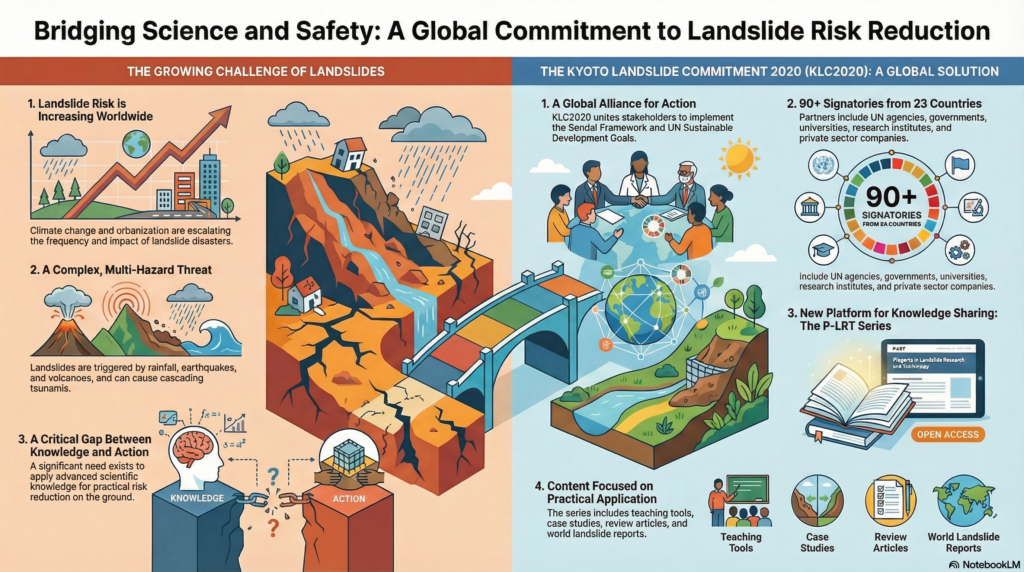
Progress in Landslide Research and Technology, Volume 1 Issue 2, 2022 (15:33) – Vol. 1 Issue 2 slides.
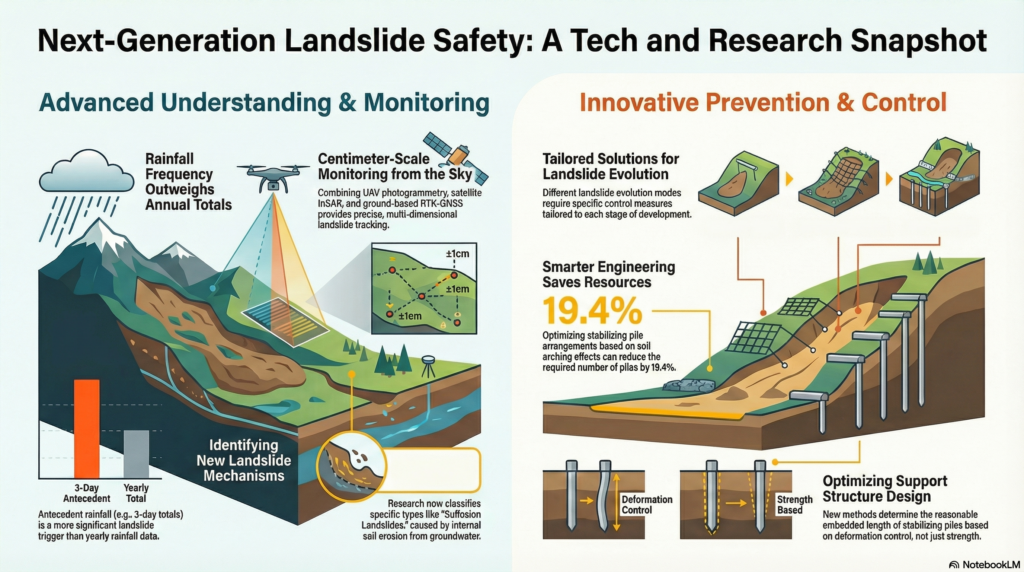
Progress in Landslide Research and Technology, Volume 2 Issue 1, 2023 (14:21) – Vol. 2 Issue 1 slides.
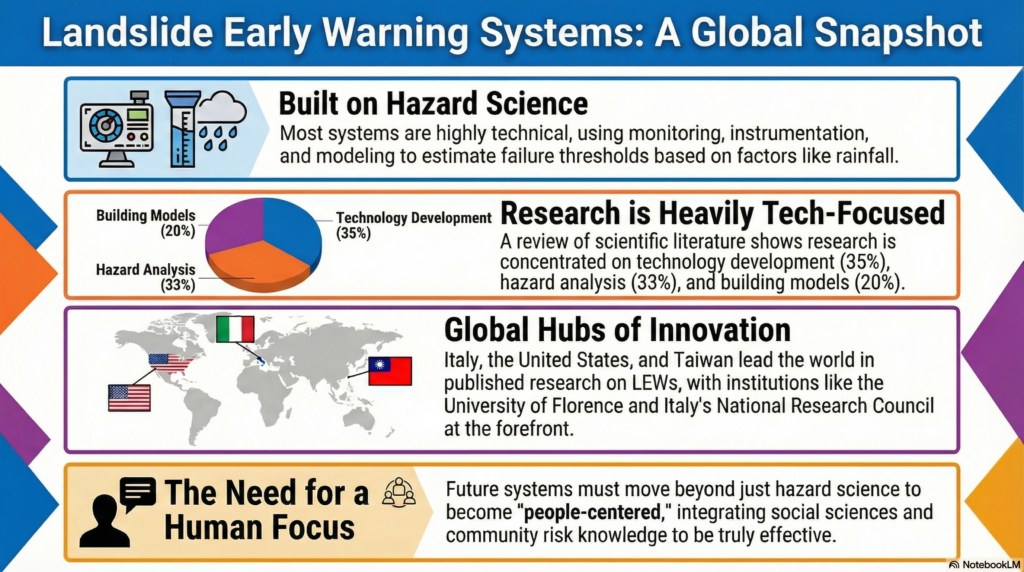
Progress in Landslide Research and Technology, Volume 2 Issue 2, 2023 (14:51) – Vol. 2 Issue 2 slides – Vol. 2 Issue 2 Mind Map
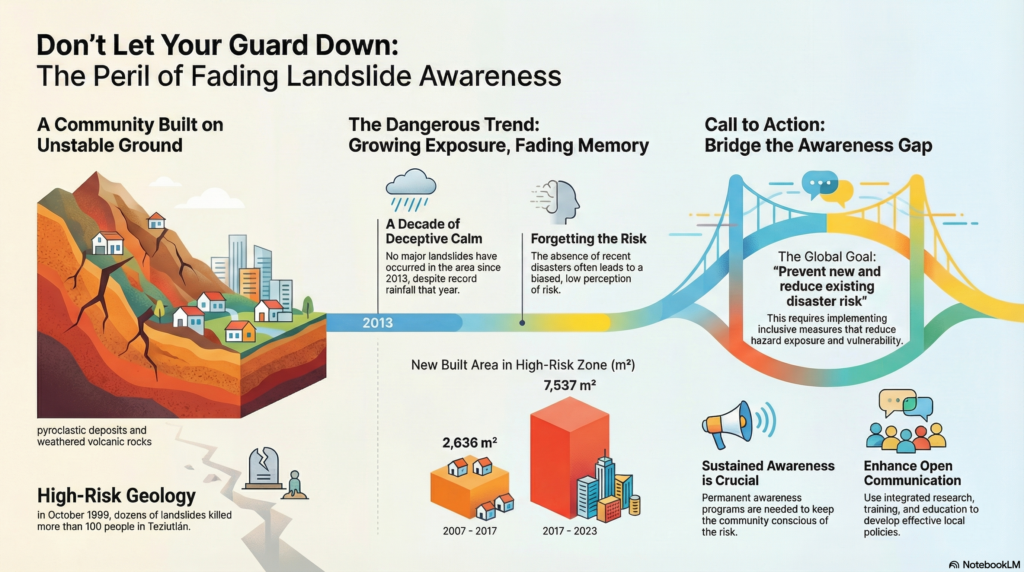
Progress in Landslide Research and Technology, Volume 3 Issue 1, 2024 (14:24) – Vol. 3 Issue 1 slides.
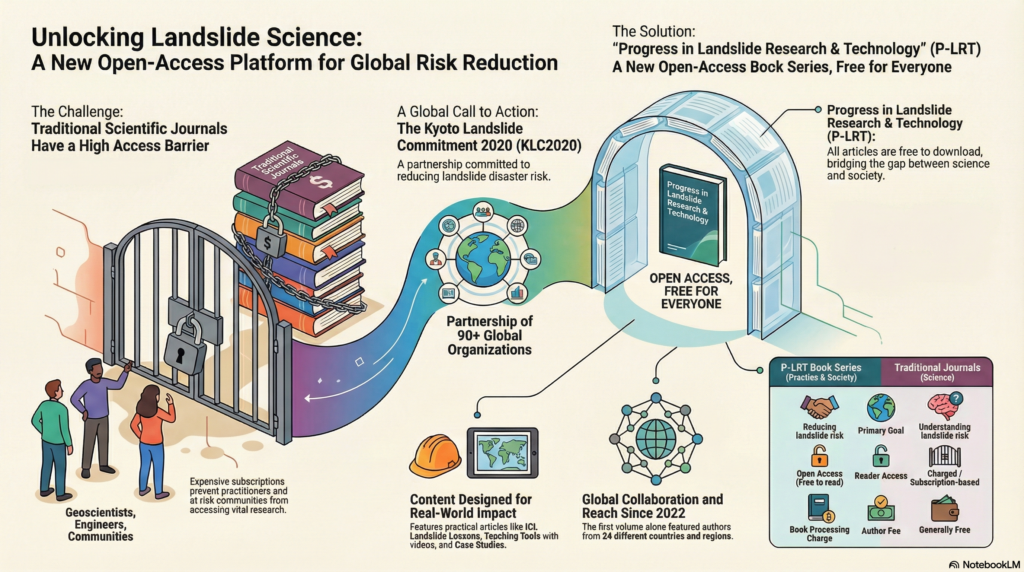
Progress in Landslide Research and Technology, Volume 3 Issue 2, 2024 (15:32) – Vol. 3 Issue 2 slides.
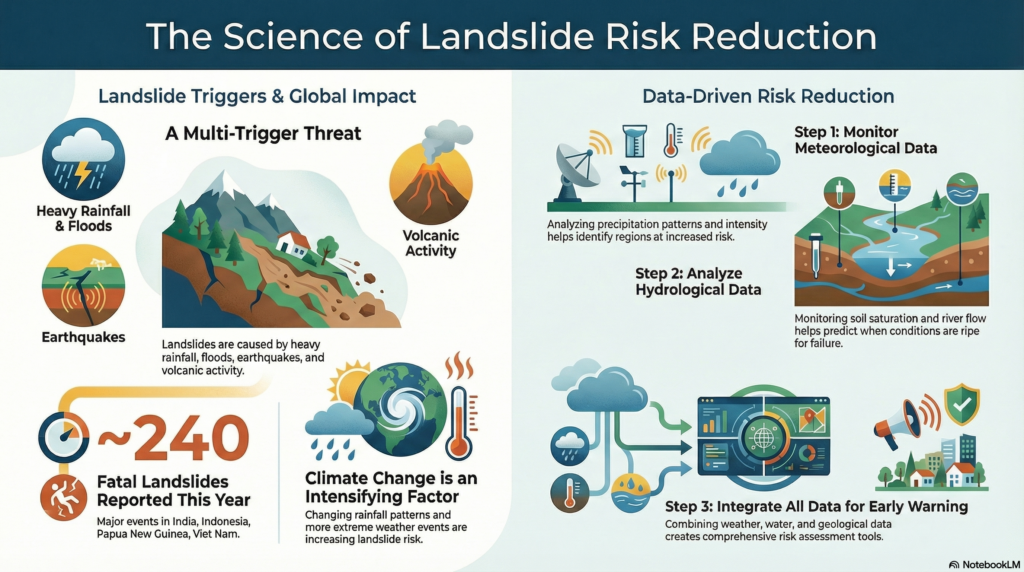
Progress in Landslide Research and Technology, Volume 4 Issue 1, 2025 (17:06) – Vol. 4 Issue 1 slides.
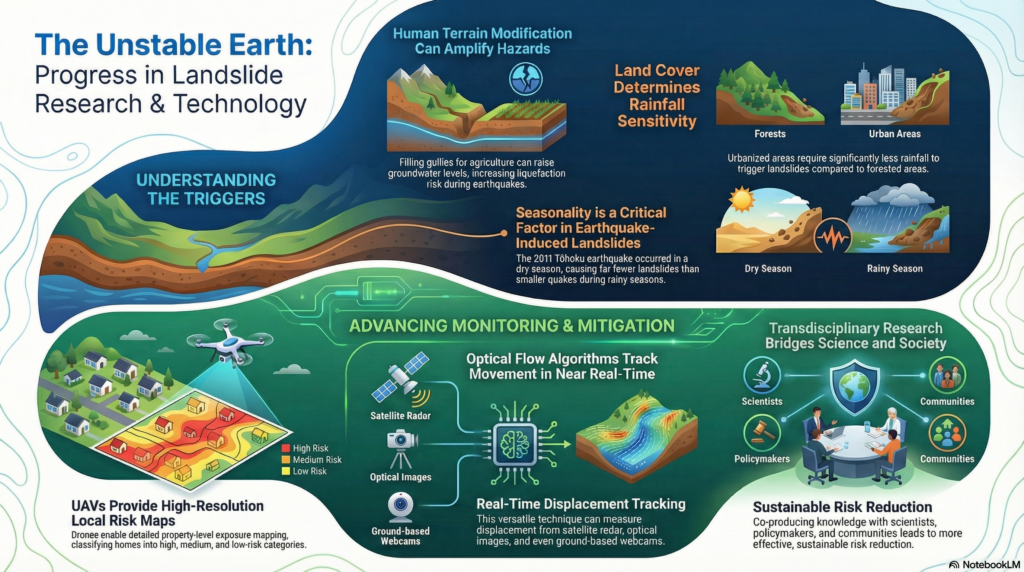
About
The Landslide Observatory is developed in collaboration with IRCAI – International Research Centre on Artificial Intelligence under the auspices of UNESCO at Jožef Stefan Institute, Ljubljana, Slovenia – to provide a multifaceted view on landslide-related information worldwide. It includes data from daily multilingual news and published science, as well as yearly ingested statistical indicators, AI policies and open education resources.